During my preparation leave for my semester exams, I visited AGRA for a wedding function with my family for 4 days. It was hot and sunny out there. On the first day itself as we reached the hotel and got ourselves relaxed and after getting freshen up
We, headed out for a half day sightseeing. Our very first stop was AGRA FORT. It was about 6 km from our hotel.
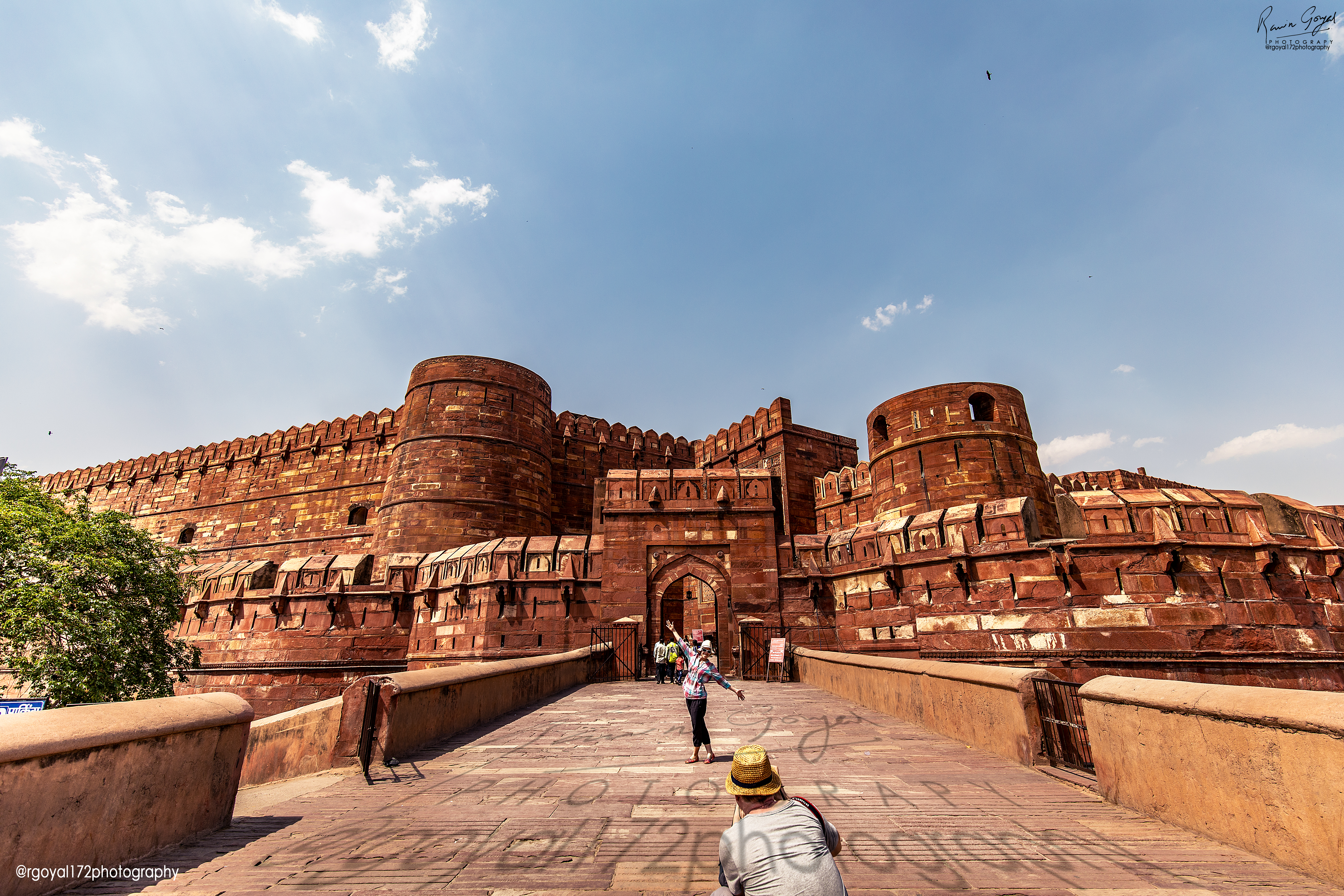
The entire fort covers an area of about 94 acres of land, but only a portion of the fort is open to public as the northern area of the fort is still in use by the military people.
Agra Fort has a very long history beginning with its construction in 1080 AD.
The fort was built to the current form by Akbar the Great of Mughal reign in 16th century. However, the fort has been in existence since 11th century. By the time the fort fell into the reign of Akbar, the structure had undergone many battles and rulers. It is assumed that it once belonged to the Rajput kings and it was called as Badalgarh.
Badalgarh was entirely built with bricks. When the fort reached in the hands of Akbar, it had just ruined. Akbar wanted to establish a capital in Agra and found the fort area to be strategic. He started to build a fort entirely out of red sandstone. The work started in 1565 and ended in 1573. Primarily, the fort was built as a military installation rather than a royal residence.
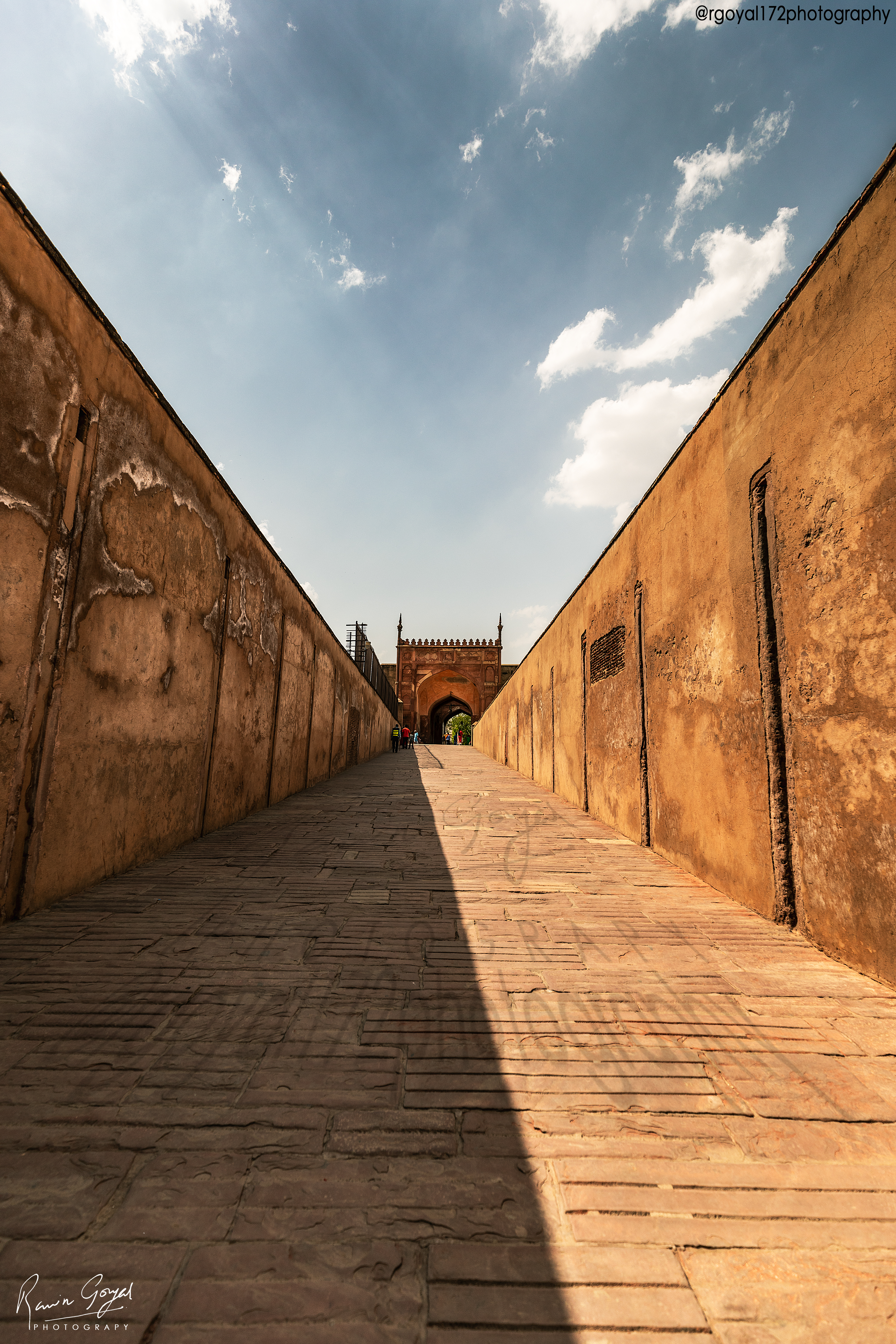
The 70-foot wall stretched for around 2 km of land. When the fort ended up under the reign of Shah Jahan, the great grandson of Akbar in the 17 th century, he tore down several palaces and structures inside the fort to make space for marble palaces. Later on, his son, Aurangazeb expanded the fort’s outer wall into a moat and formed a secret escape tunnel.
After Aurngazeb’s death in the 18th century, the Agra Fort was left to ruin. Marathas invaded and seized the fort. The other kings around the region fought with the Marathas for the hand on the fort. It moved from one reign to another for the next hundred years before ending with the British Empire. British used it as their military base. After independence, Indian army is now using the part of the fort.
However, the remains you can see today are actually from 1573 AD when Akbar, the emperor at that time, had the fort rebuilt in red sandstone. Later, Akbar’s grandson, Shah Jahan, the one who had the famous TAJ MAHAL built, added structures inside which were made of white marble to match it with the TAJ MAHAL. And that is how Agra Fort appears today – a combination built of red sandstone with marble palaces on the inside.
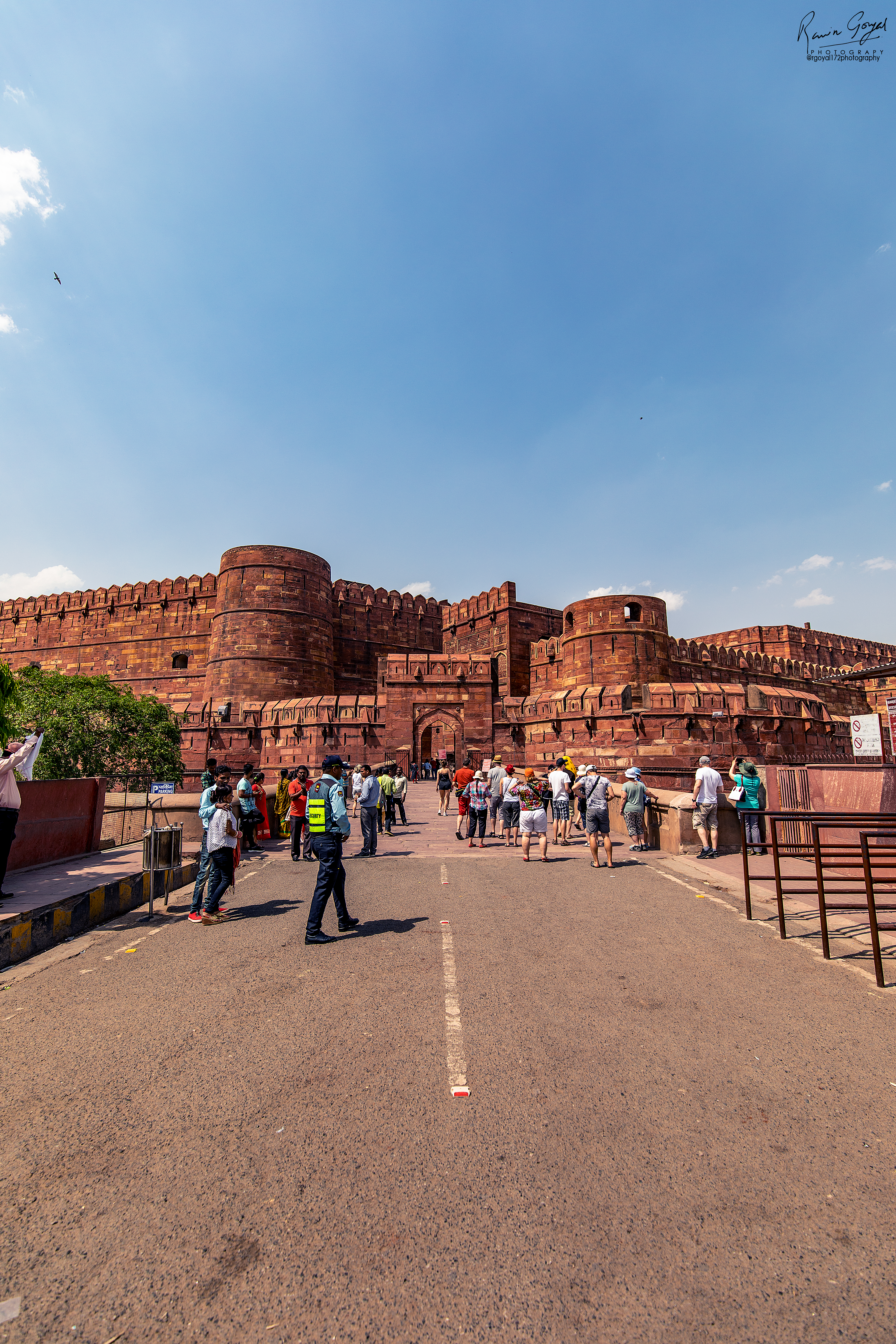
The wide spreaded fort has 4 entrance gates. The one gate which is open to public is the AMAR SINGH GATE. Charging an entrance fee of RS- 250 for tourists to visit. If you wish to hire a guide then you can hire the guide accordingly, but don’t forget to bargain, as they to tend to charge big amounts.
As soon as I entered the premises, the first thing which I noticed was that such an ancient piece of architecture is in such good condition. The beautiful carving done on the red sandstone completely left us astonished.
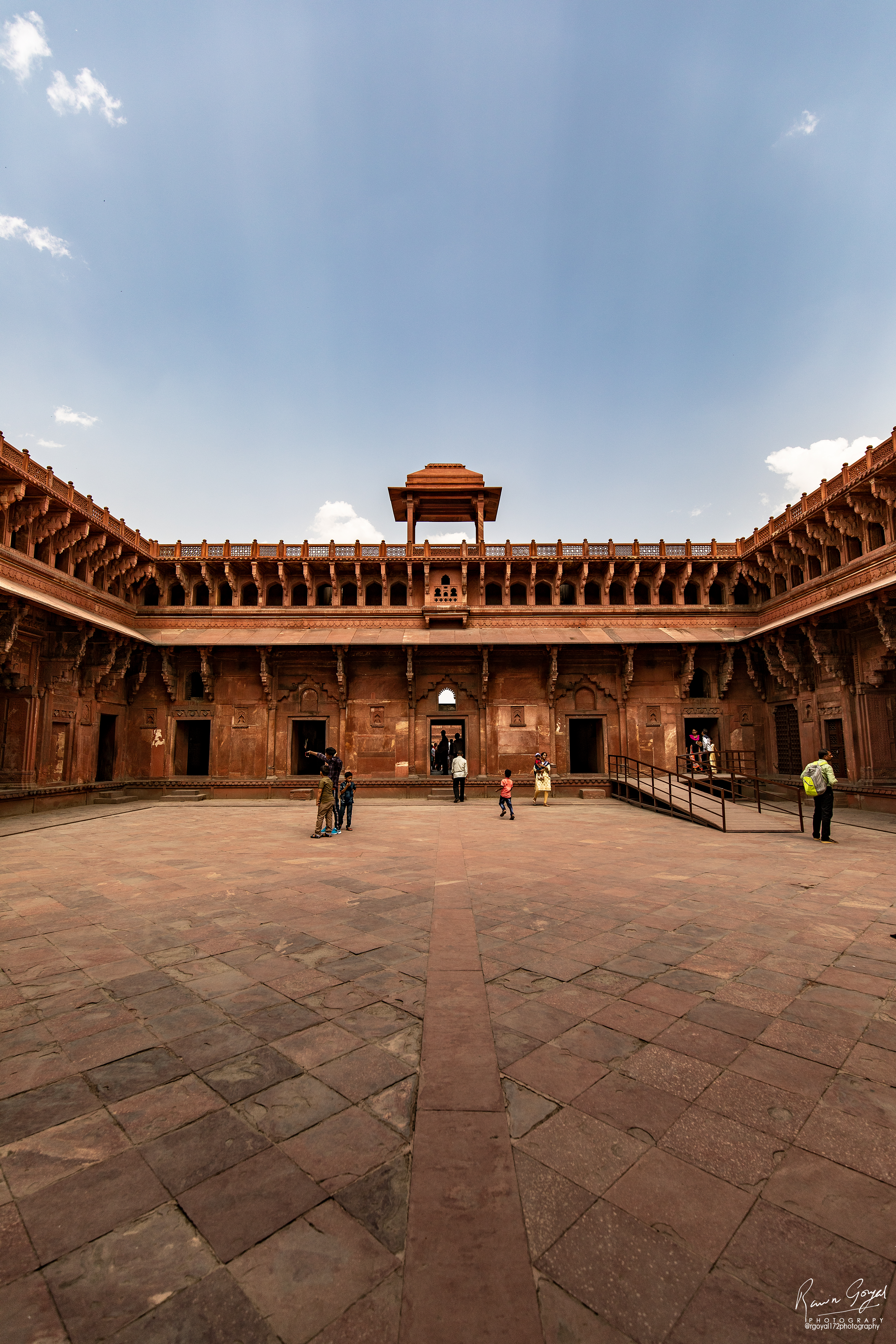
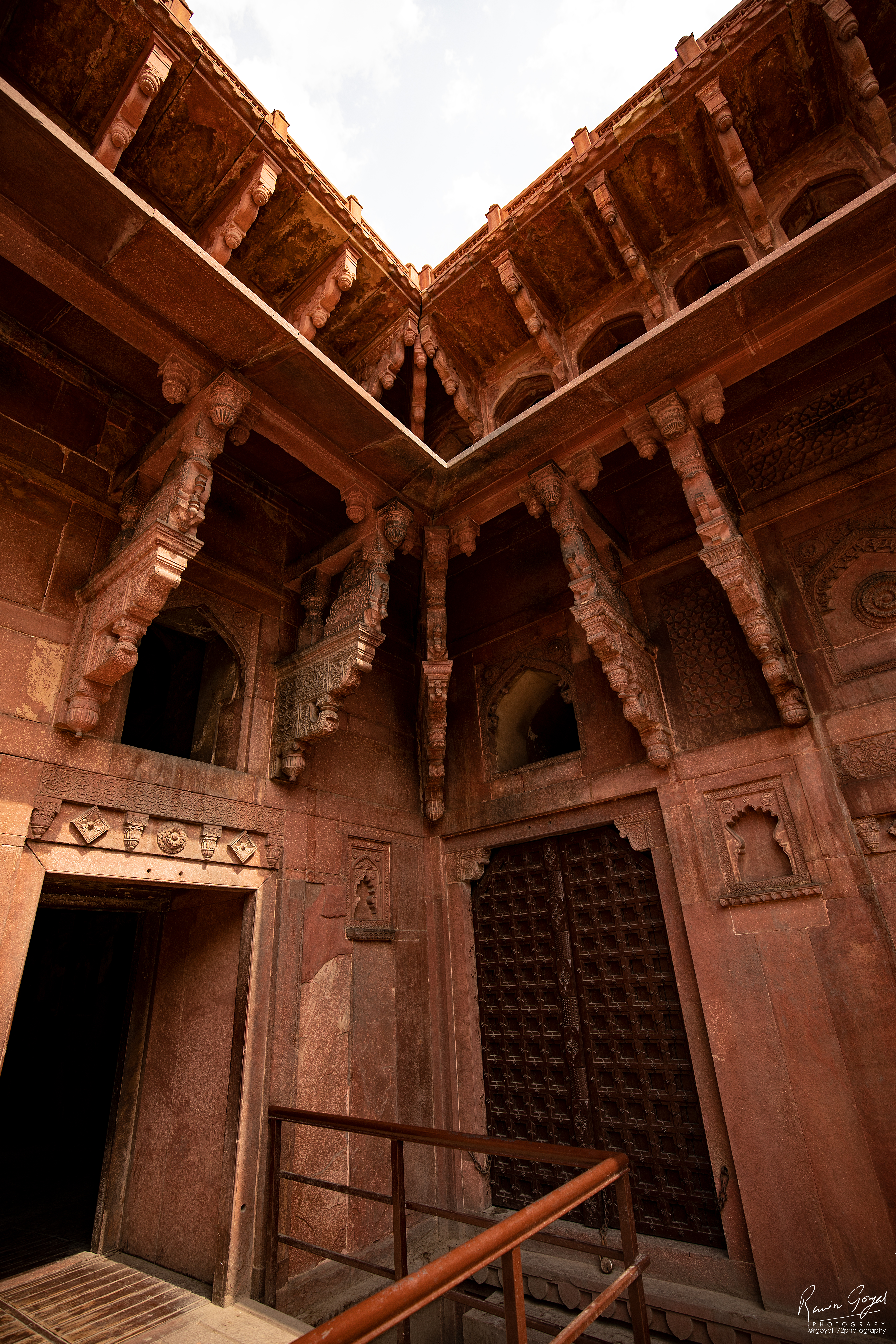
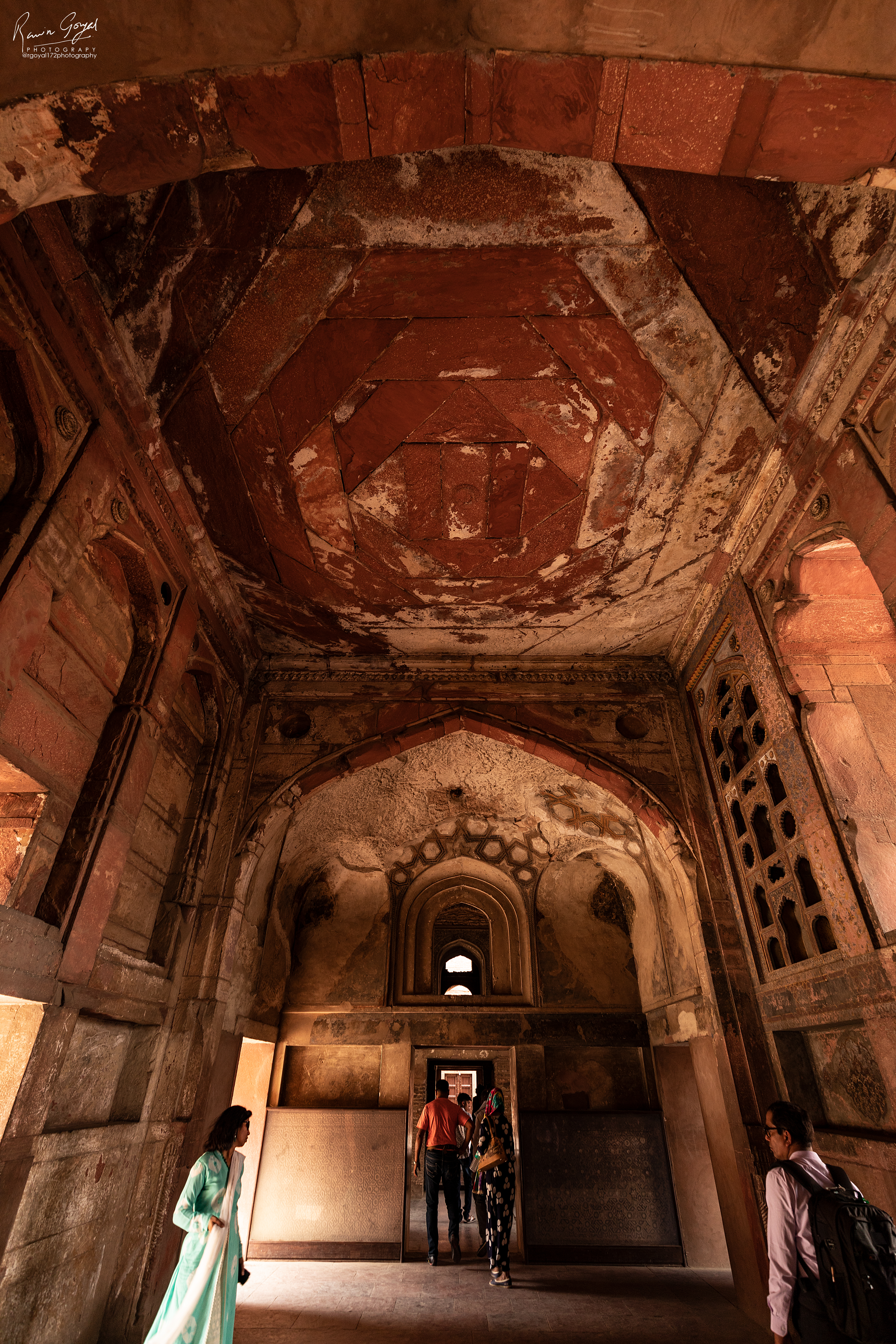
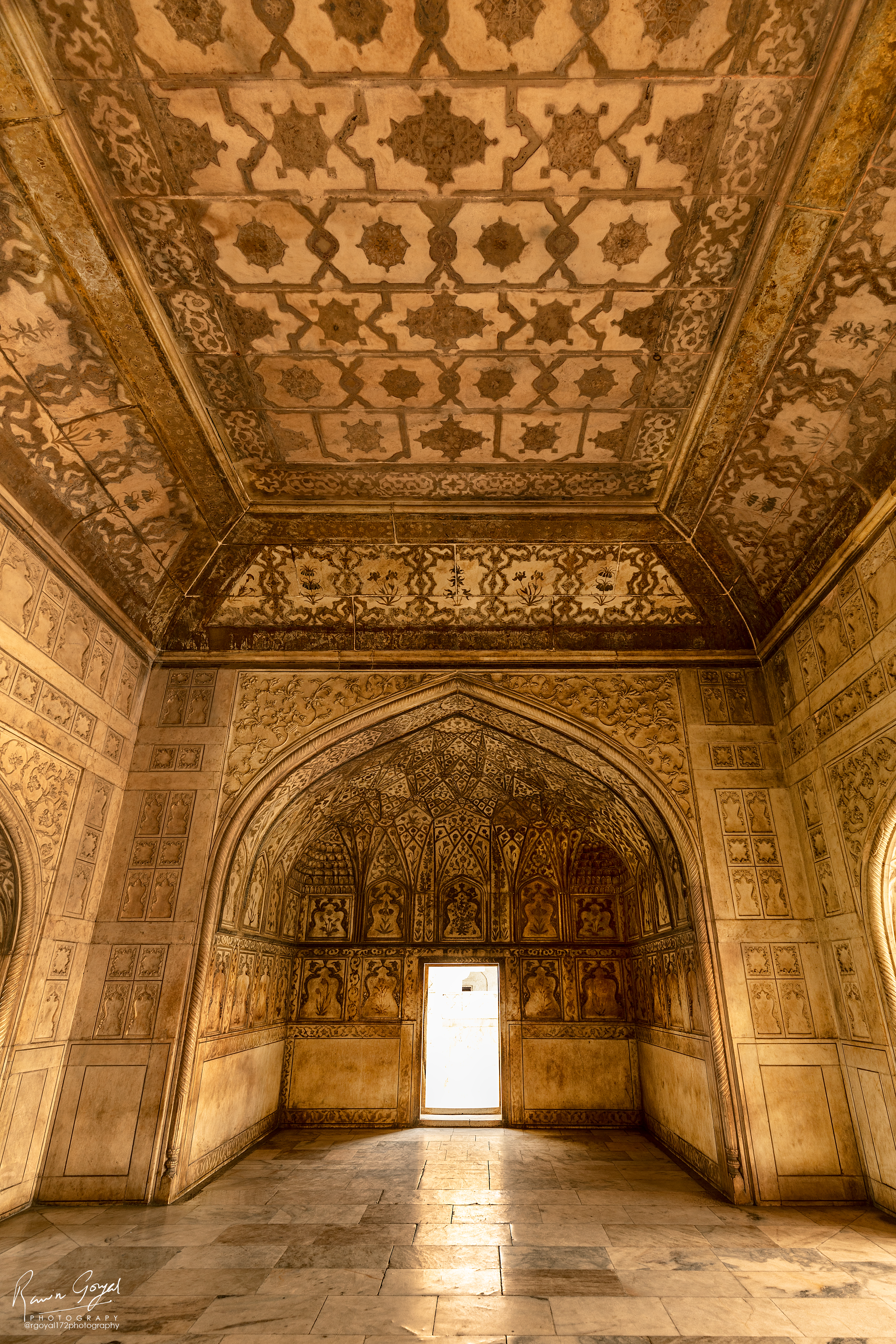
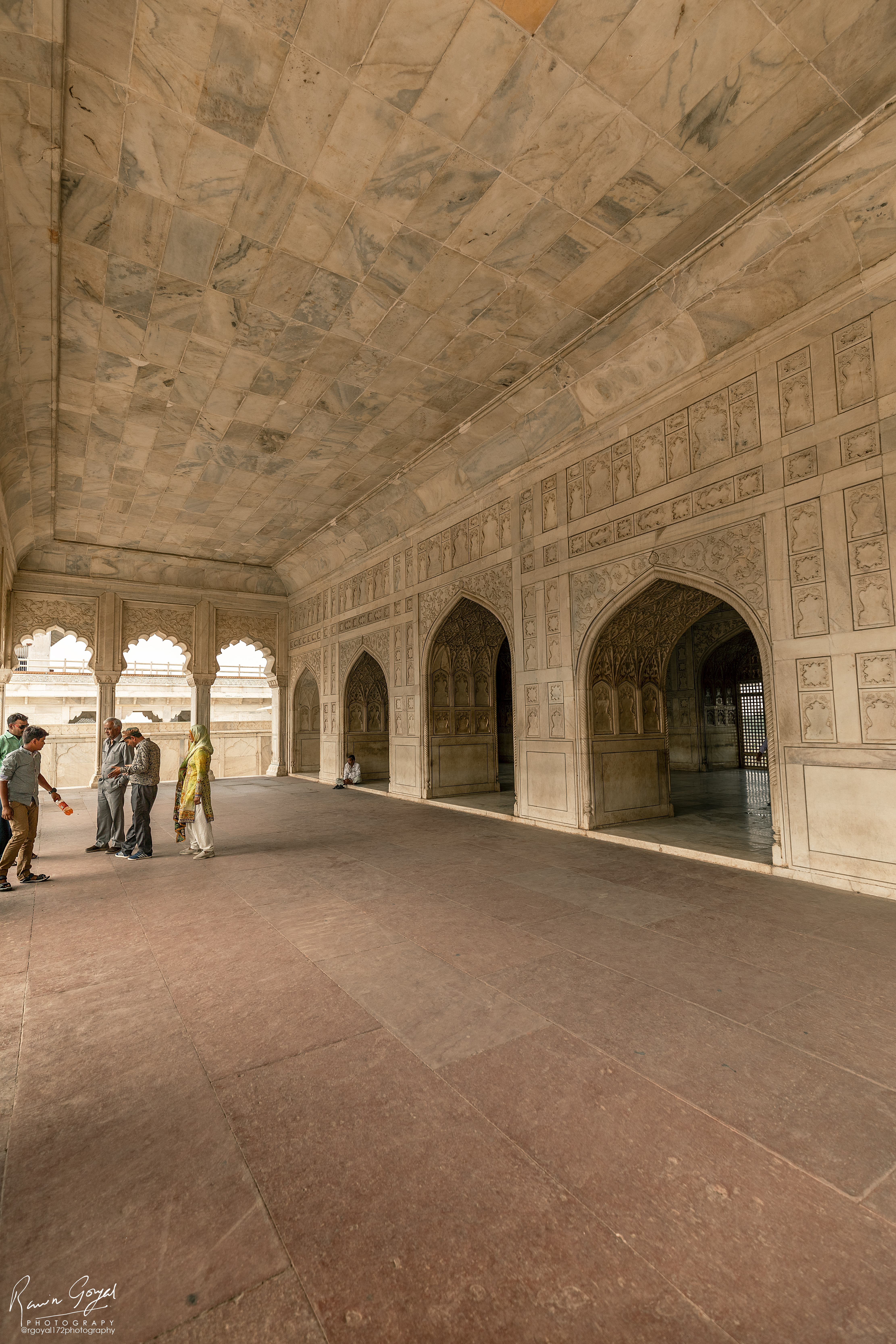
As mentioned earlier, much part of AGRA FORT is closed for the visitors but still there is a lot to see for the tourists, which will amaze them.
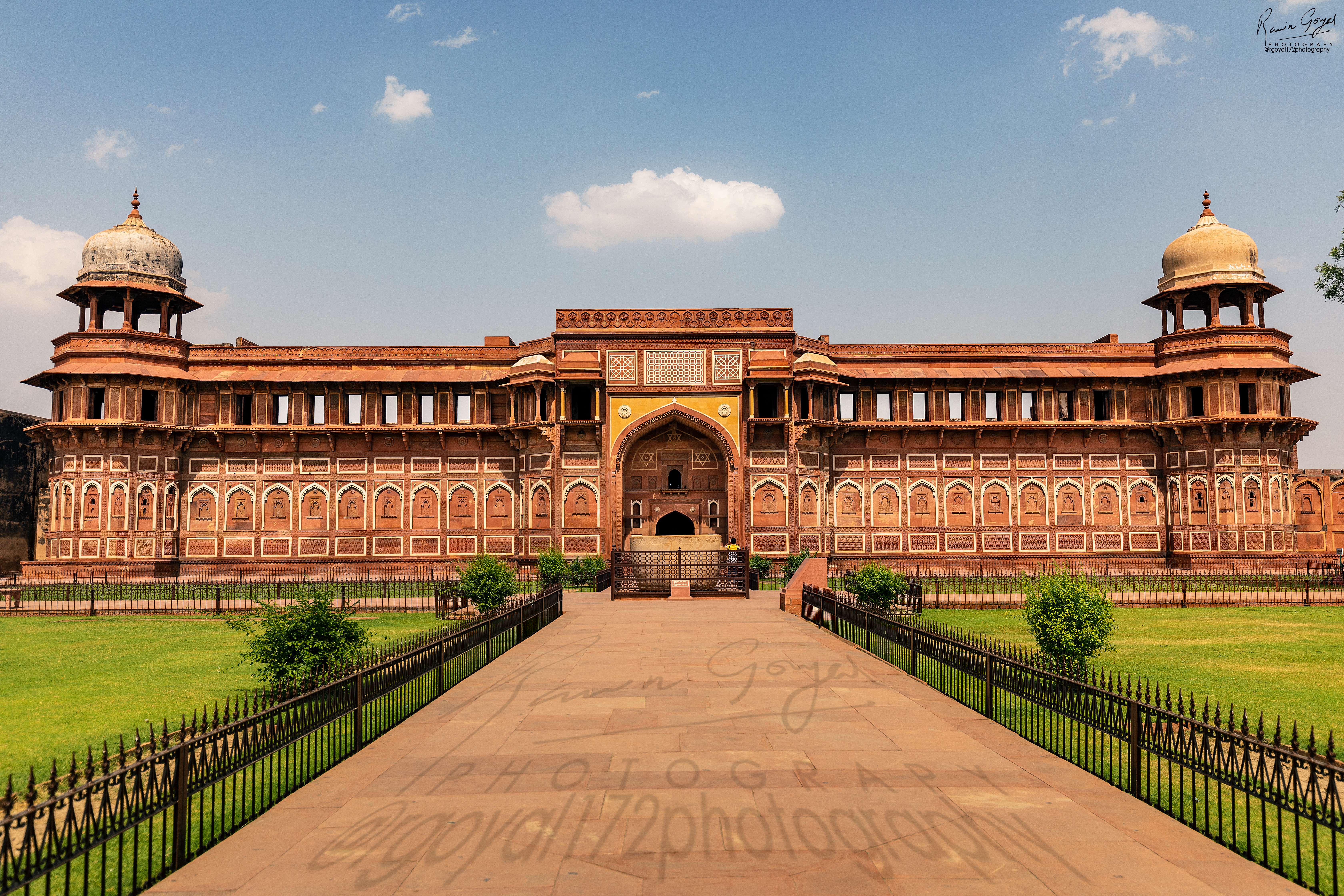
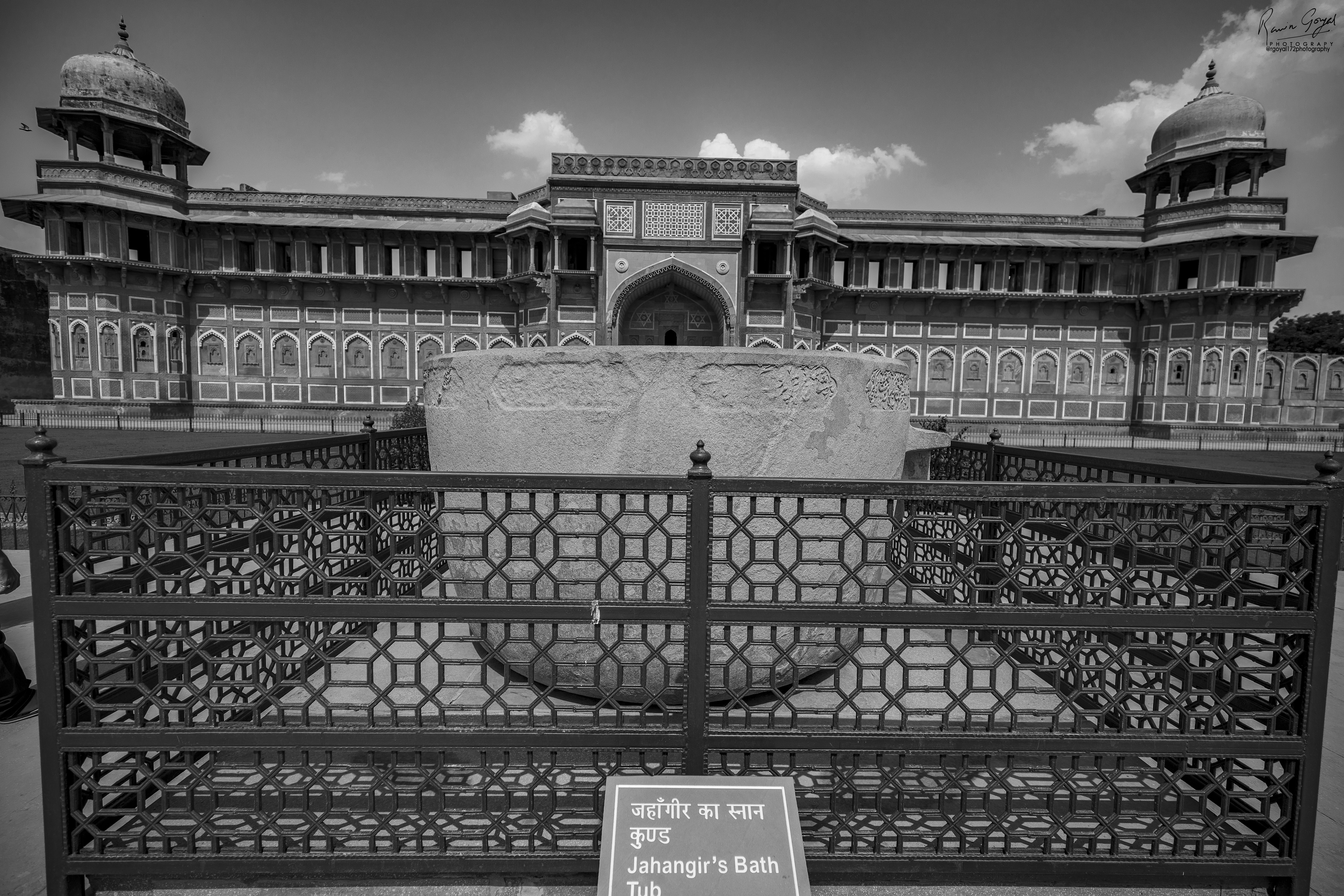
The very first thing that you can see after entering the fort is THE JAHANGIR MAHAL which was built by AKBAR for his son, JAHANGIR. Ultimately it became the Zenana, which means the palace for the royal women of the family. It housed the wife of Akbar and Jahangir. One of the most exceptional buildings in the Agra fort , the palace has a gateway that connects to an inner courtyard which sits amidst lavish halls that are decorated with engravings on stone , columns and cross-pieces . The courtyard halls and adorned in a Gujarat-Malwa-Rajasthan architecture styles.
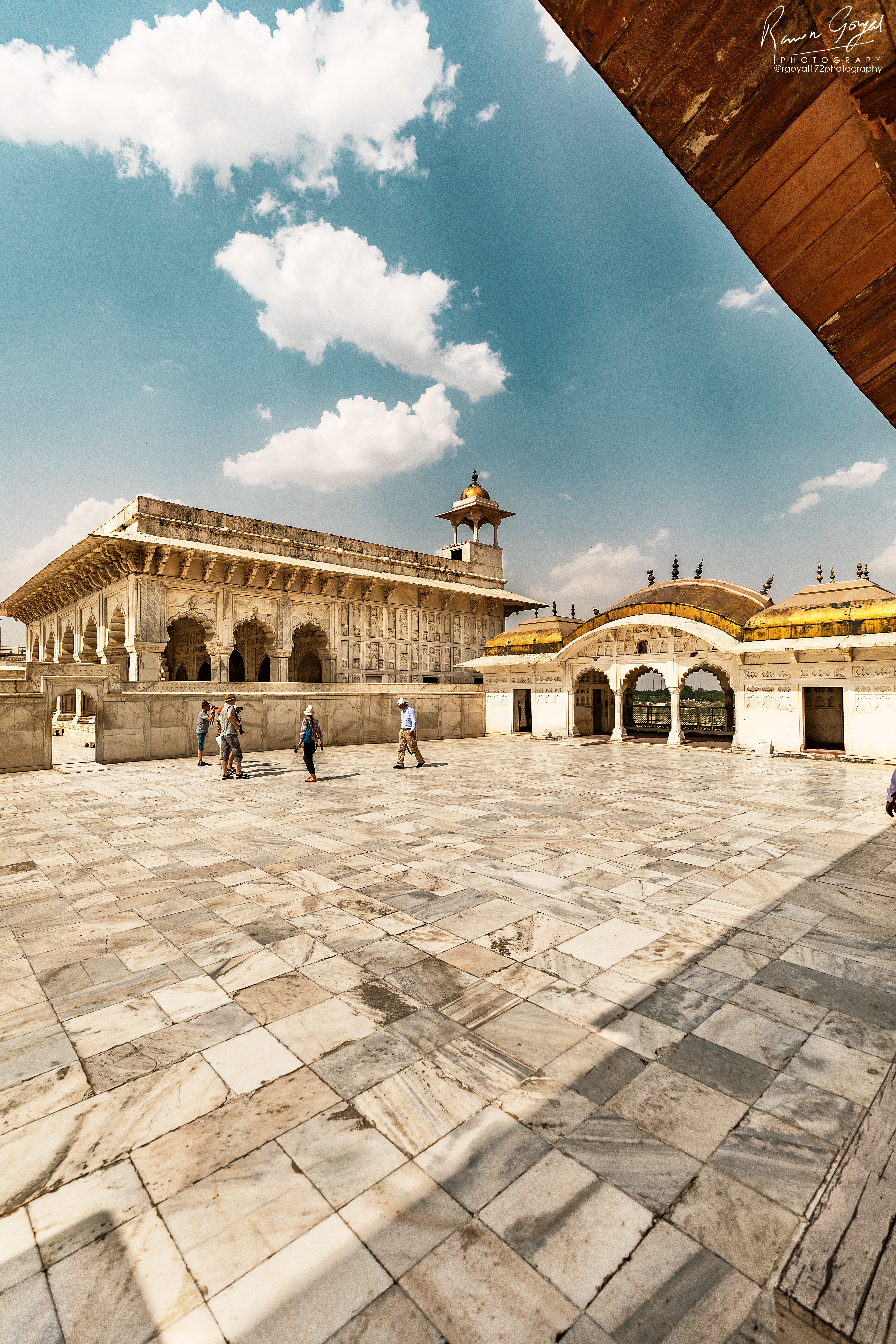
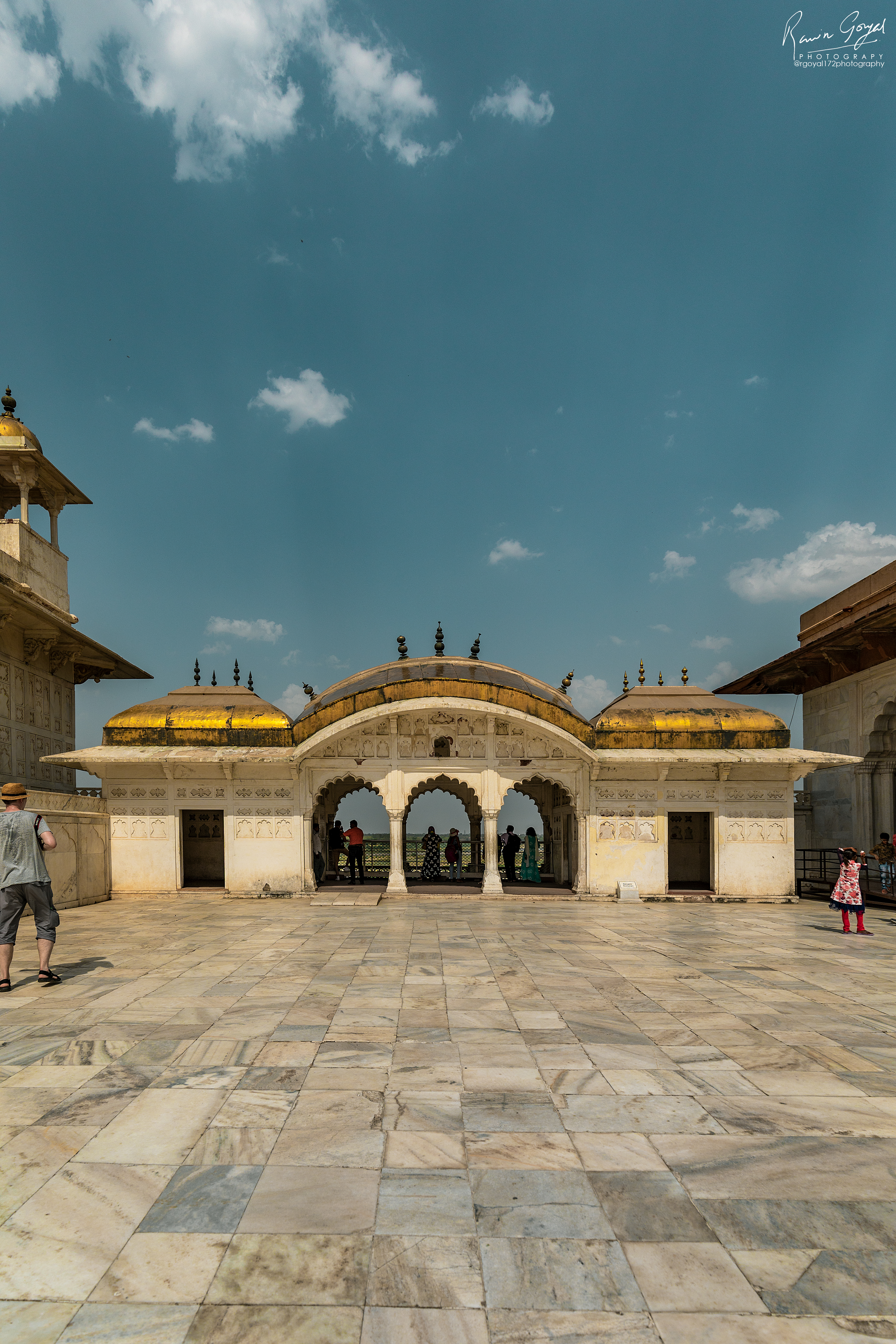
My next stop was MUSAMMAN BURJ which is one of the best portions inside the Agra Fort. It was built by SHAH JAHAN for his favorite wife, MUMTAZ MAHAL. The Musamman Burj represents a marble design inlaid with precious stones, a domed ceiling, and a fountain in the centre of the room. The views from the Burj of TAJ MAHAL are spectacular. During the last few years of his life he was imprisoned here by his son, Aurangzeb and forced to look out at his greatest creation (THE TAJ MAHAL) until the day he died.
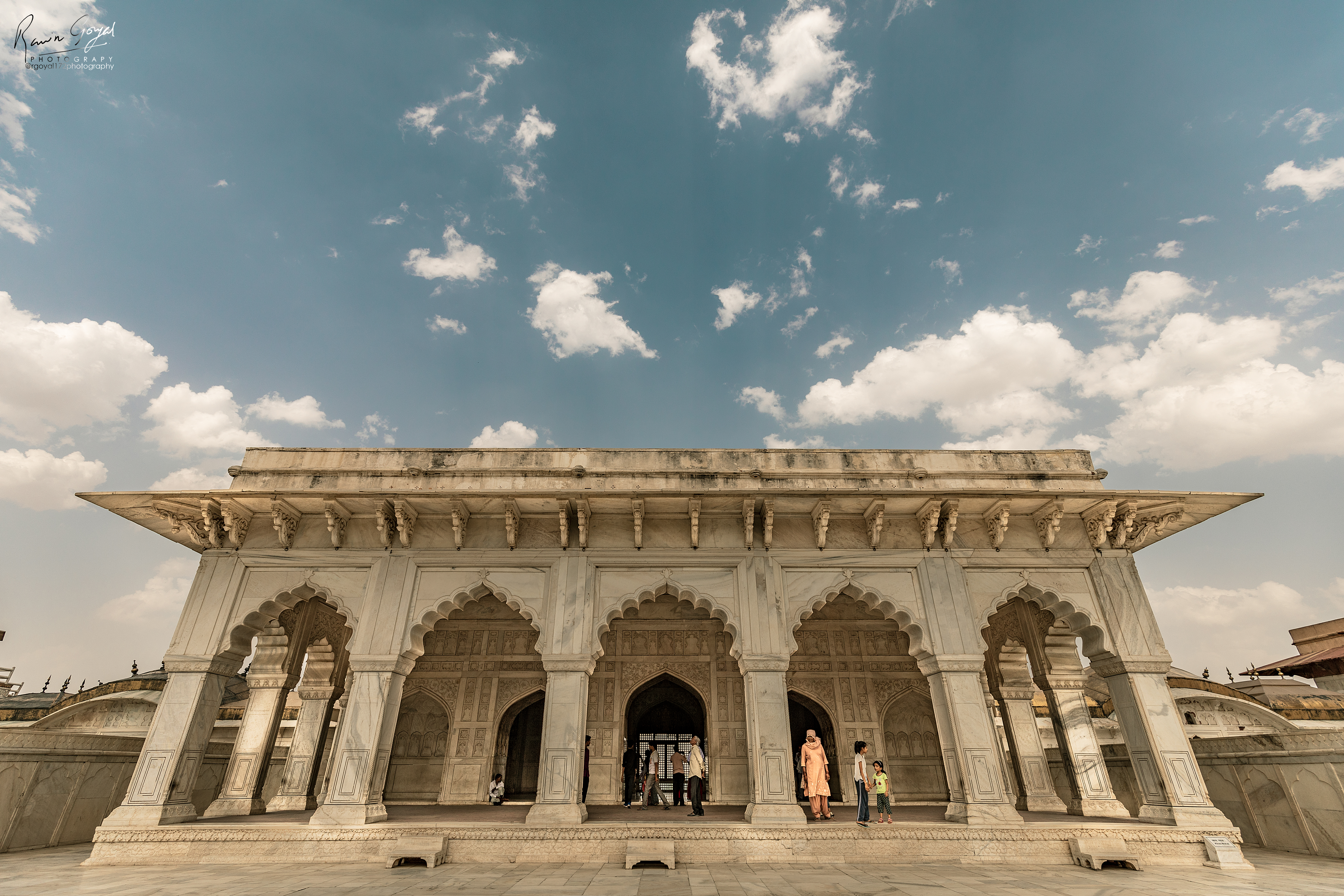
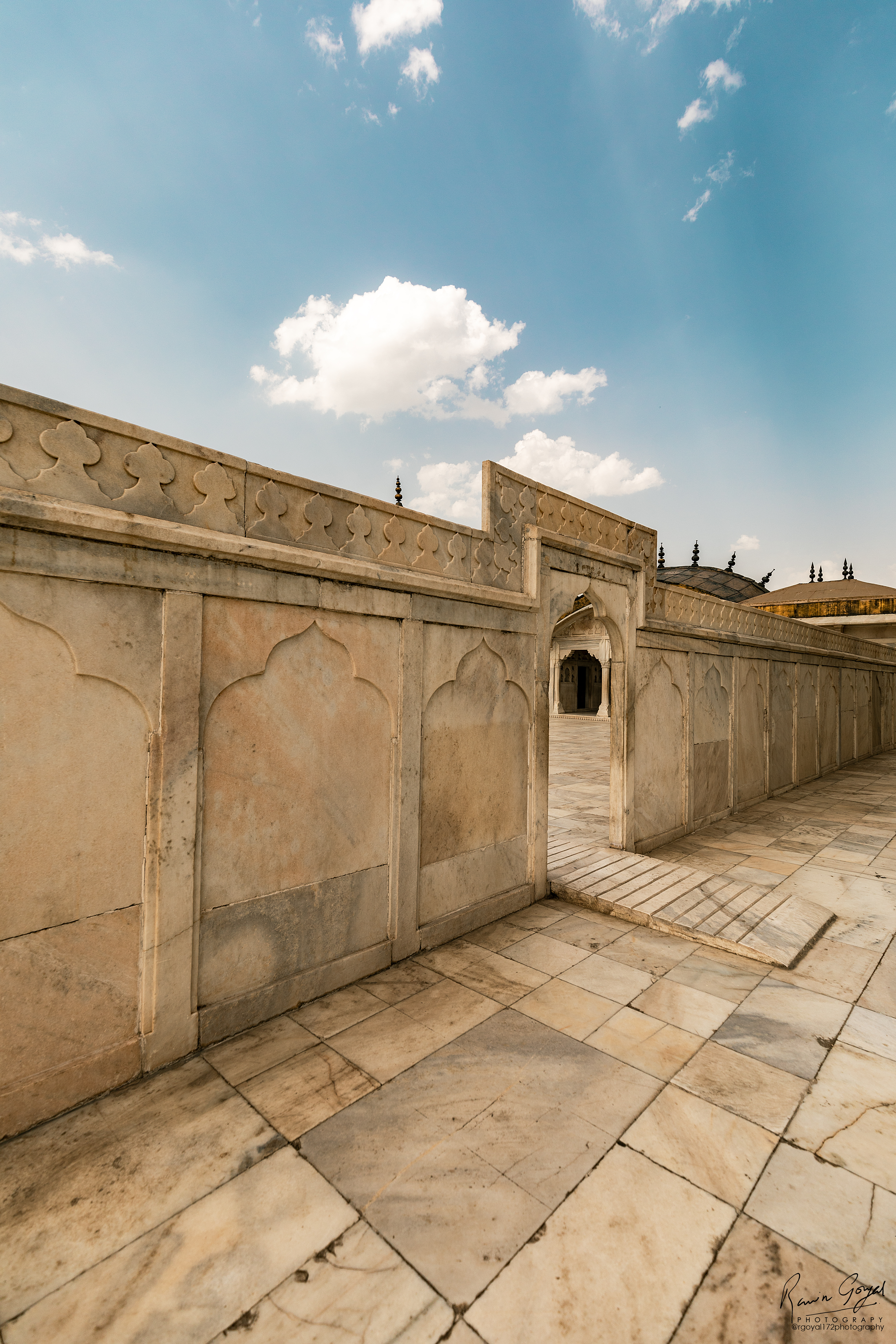
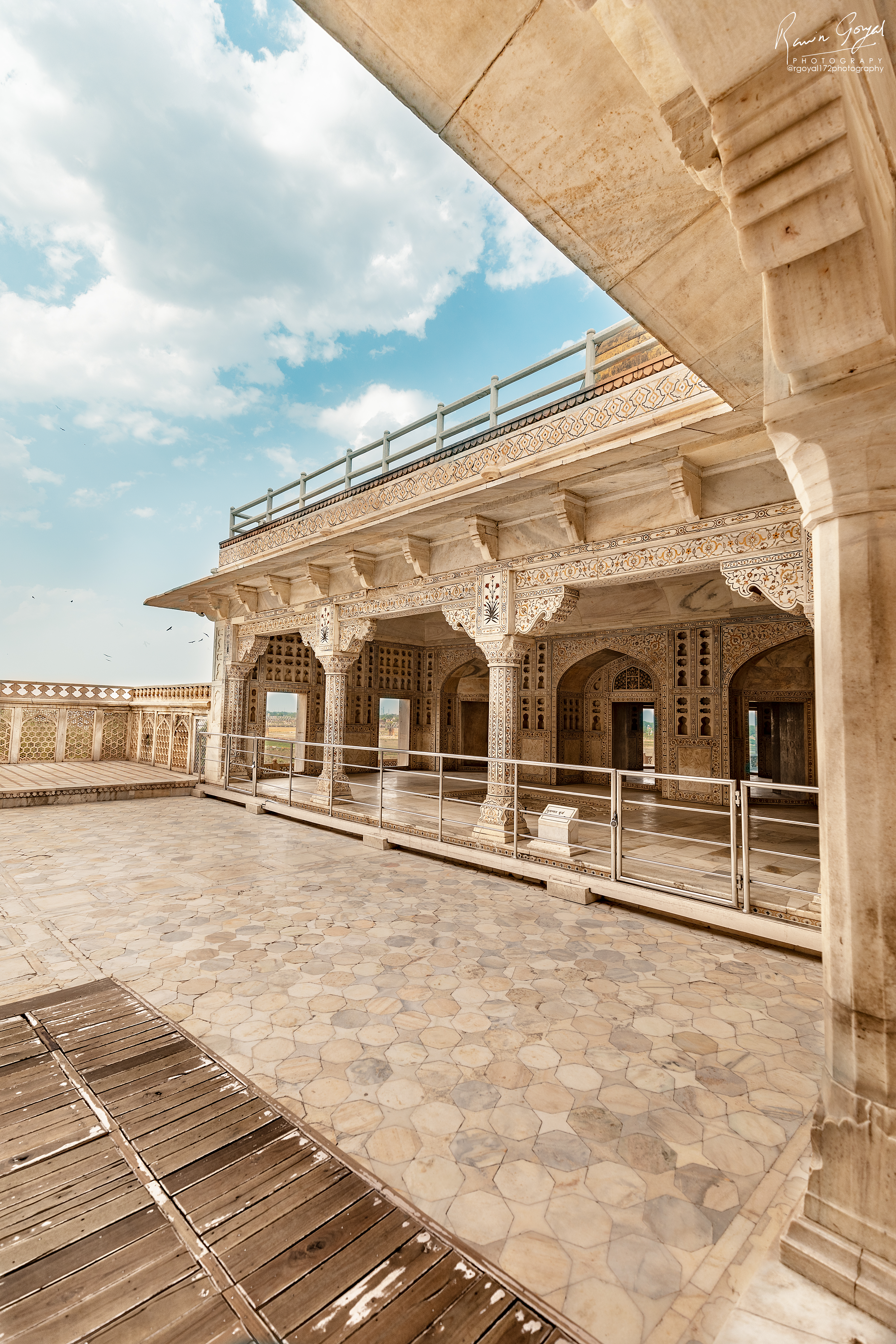
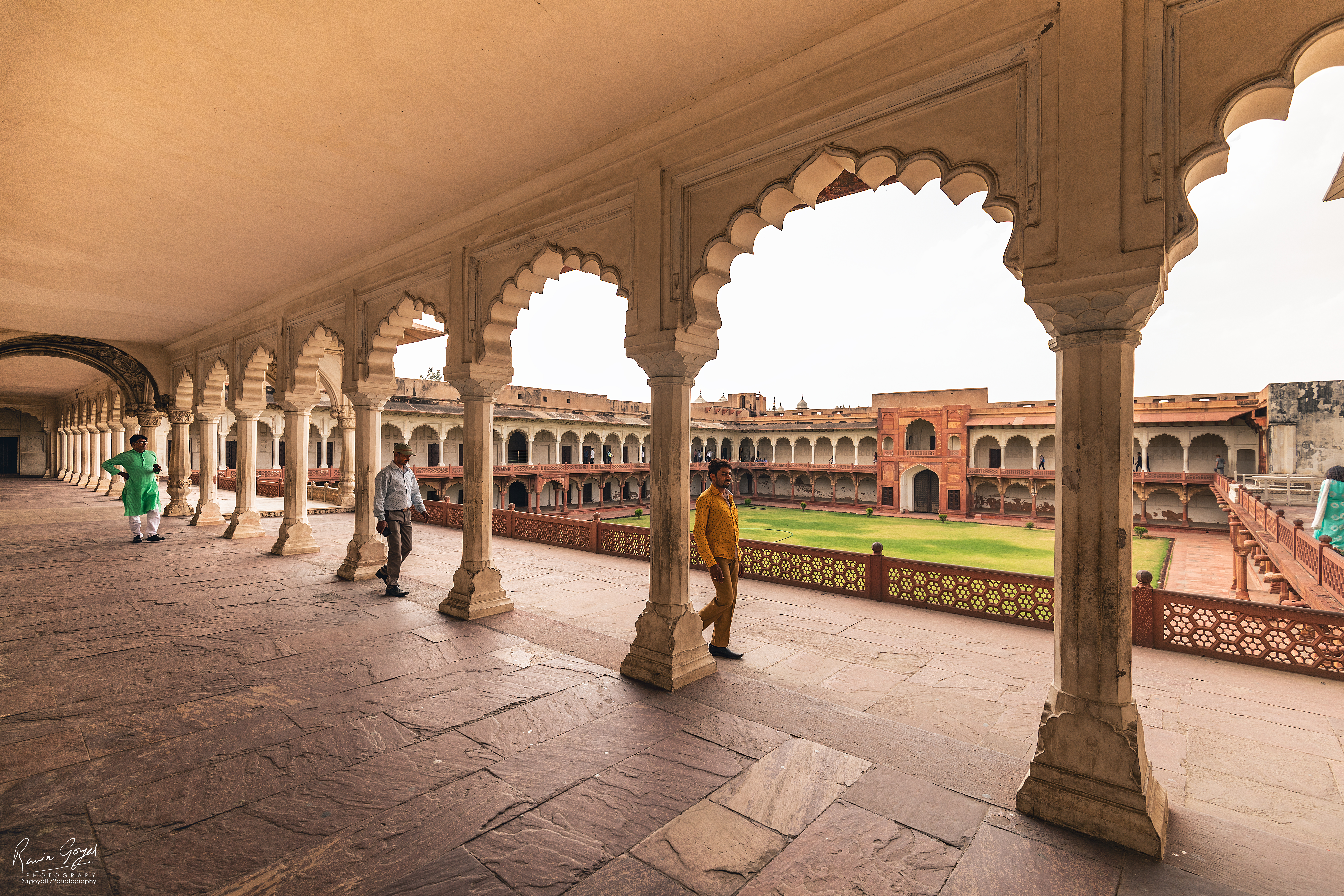
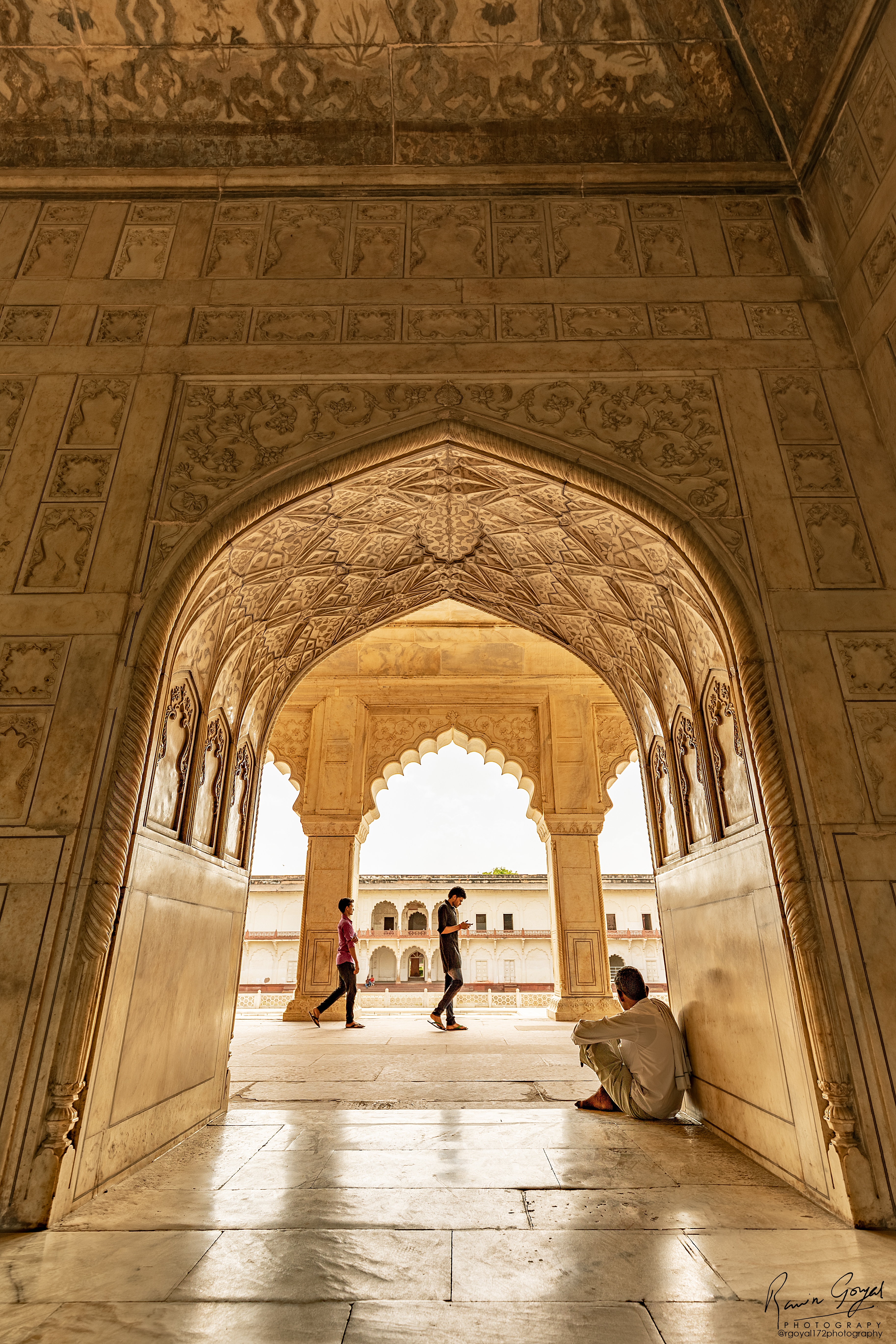
It was really a delight to visit the fort and it had awestruck me and my family , the way it was build , crafted , maintained , material quality and ideology behind each and every construction of segments. I recommend people who are interested in history and love to explore architectural places and discover their crafting and other works , this is a pure treat for them .
As they would get to see many new designs , concepts and what ideas they applied in building such massive and gigantic fort .
Image credits – Ravin Goyal
!!THANK YOU!!
 Site Title